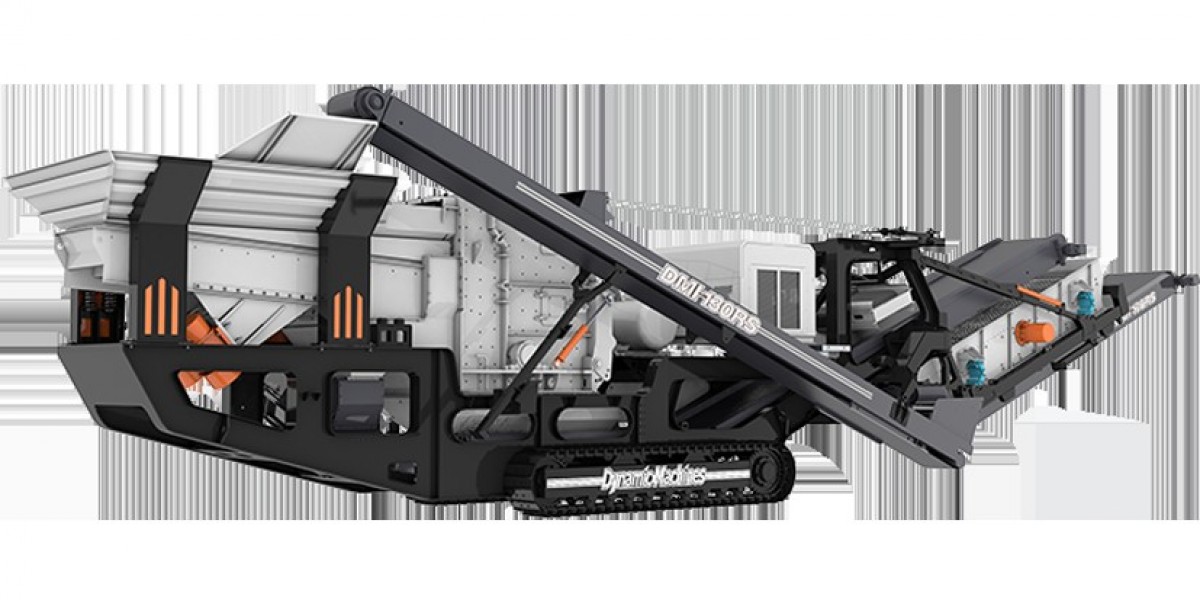

The operational stability of machines from a Mobile Impact Crusher Factory across different terrains is a critical factor for reliable performance in construction, mining, and recycling projects. Crushing operations are often conducted on uneven, soft, or rugged surfaces, which can challenge the balance and safety of any equipment. Mobile impact crushers are designed with these conditions in mind, incorporating features that maintain stability and consistent operation, regardless of site characteristics. Stability ensures not only effective crushing but also safety for operators and personnel working nearby.
One of the main design considerations is the mobility system. Many mobile impact crushers are equipped with heavy-duty tracks or reinforced wheels that distribute weight evenly and provide traction on rough, muddy, or inclined surfaces. This prevents tipping or uneven pressure on the frame, which could otherwise lead to mechanical stress or downtime. By allowing smooth movement over difficult ground, the crusher can maintain productivity even when the worksite presents challenging conditions that stationary crushers cannot easily handle.
In addition, the machine’s low center of gravity contributes significantly to stability. Components are arranged in a way that minimizes top-heavy tendencies, which reduces the risk of tipping when the machine is processing heavy or irregular material. Reinforced structural supports further enhance rigidity, enabling the crusher to absorb shocks from rocks and other hard materials without compromising operational integrity. This combination of weight distribution and structural reinforcement ensures that the crusher remains secure during both movement and stationary operation.
Hydraulic stabilization systems are also commonly employed in modern mobile impact crushers. Adjustable outriggers or stabilizing legs can be deployed on uneven ground to provide additional support and maintain level operation. These systems allow operators to set up the machine quickly and safely, even on slopes or soft soil, improving both efficiency and safety. Such adaptive features ensure that the crusher can function effectively in a wide range of site conditions, from open quarries to urban demolition areas.
Maintenance considerations further support stability. Mobile impact crushers are designed with accessible service points that allow for quick inspection and adjustment of tracks, wheels, and hydraulic components. Regular maintenance ensures that mobility and stability systems operate correctly, minimizing the risk of unexpected failures due to terrain challenges. High-quality materials and robust engineering also reduce wear and tear, ensuring long-term stability even under continuous use on difficult ground.
In conclusion, a Mobile Impact Crusher Factory produces machines engineered for stable operation across diverse terrains. Features such as heavy-duty tracks, low center of gravity, reinforced frames, and hydraulic stabilization systems enable these crushers to maintain reliability and safety in uneven or challenging environments. By combining mobility with advanced engineering, these machines ensure continuous, efficient, and secure crushing operations, meeting the demands of various industrial sites where terrain conditions would otherwise compromise performance.
Feed Particle Size: ≤650mm
Processing Capacity: 80-360t/h
Machinery Weight: 45-62t