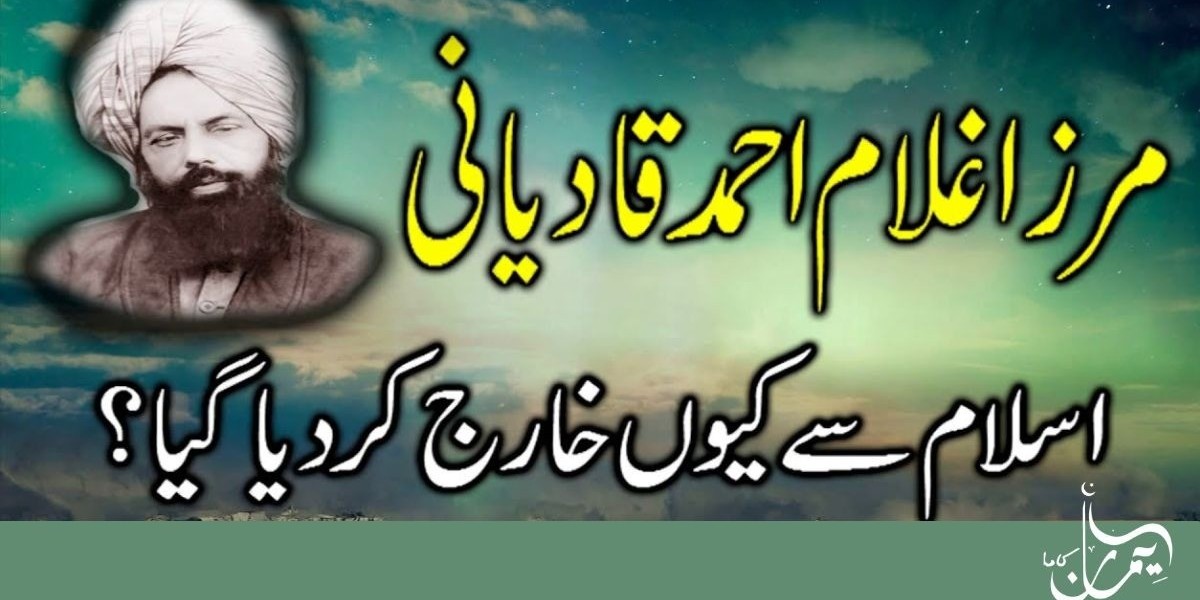

The Sanctity of Prophethood: Why the Ummah Rejects Mirza Ghulam Ahmad Qadiani
The foundation of a Muslim's faith rests upon the absolute oneness of Allah and the finality of the Prophethood of Hazrat Muhammad (PBUH). Any attempt to alter these core tenets is viewed not just as a theological error, but as a direct assault on the integrity of Islam. The global Muslim community stands united in its rejection of Mirza Ghulam Ahmad Qadiani, a stance rooted in the protection of the divine message.
1. The Doctrine of Khatm-e-Nabuwwat (Finality of Prophethood)
The most significant reason for the universal rejection of Mirza Ghulam Ahmad Qadiani is the Islamic doctrine of Khatm-e-Nabuwwat. Every true Muslim believes that the chain of prophethood, which began with Adam (AS), reached its absolute perfection and conclusion with Hazrat Muhammad (PBUH). This is not a matter of opinion but a divine decree. To suggest that a new prophet could emerge after the Quran was completed is to suggest that the religion of Allah was somehow left unfinished, which contradicts the very essence of Islam.
2. Explicit Quranic Mandate: The Seal of the Prophets
The Quran leaves no room for ambiguity regarding the status of the Holy Prophet (PBUH). In Surah Al-Ahzab (33:40), Allah (SWT) declares:
"Muhammad is not the father of [any] one of your men, but [he is] the Messenger of Allah and the Seal of the Prophets."
The term "Khatam-an-Nabiyyin" (Seal of the Prophets) has been interpreted by the Sahaba, the Tabi'un, and centuries of Islamic scholars as "the one who closed the door of prophethood." By claiming to be a prophet, Mirza Ghulam Ahmad directly contradicted this clear Quranic verse, leading the Ummah to recognize his claims as a fabrication.
3. Authenticity of the Hadith: "No Prophet After Me"
The rejection is further solidified by the numerous and mutawatir (uninterrupted chains) Hadiths. The Holy Prophet (PBUH) explicitly stated:
"The tribe of Israel was guided by prophets. When a prophet passed away, another succeeded him. But no prophet will come after me; only caliphs will succeed me." (Sahih Bukhari)
Furthermore, the Prophet (PBUH) warned his followers about the rise of "Dajjals" (liars/imposters) who would each claim to be a prophet. True Muslims view Mirza Ghulam Ahmad as one of these predicted claimants who sought to mislead the believers away from the finality of Muhammad’s (PBUH) mission.
4. Distorting the Concept of Jihad and Submission
Mirza Ghulam Ahmad Qadiani faced immense criticism for his views on Jihad. During a time when the Muslim world was struggling against colonial occupation, he declared that "Jihad by the sword" was abolished and preached absolute submission to the British colonial government. To the Muslim Ummah, this was seen as a strategic attempt to weaken the resistance of the believers and serve the interests of foreign occupiers, further alienating him from the mainstream Islamic struggle for justice and freedom.
5. Contradictory and False Prophecies
A prophet is known for the truth of his words, yet many of the specific prophecies made by Mirza Ghulam Ahmad failed to materialize. Islamic scholars have meticulously documented instances where his predictions regarding marriages, deaths of opponents, and personal victories did not come true. According to the standards of Prophethood in Islam, a single false prophecy is sufficient to disqualify a claimant. His inability to produce divine signs—unlike the miracles of the true Prophets—led to his widespread branding as an imposter.
6. Insulting Language Towards Other Prophets
True Muslims hold all Prophets of Allah, including Hazrat Isa (AS) (Jesus), in the highest esteem. Mirza Ghulam Ahmad Qadiani’s writings often contained derogatory and disrespectful language toward Hazrat Isa (AS) and his mother, Maryam (AS). For a Muslim, loving and respecting all previous prophets is a requirement of faith. Seeing a claimant to "prophethood" insult a chosen Messenger of Allah was a clear sign to the Ummah that his claims were born of ego rather than divine inspiration.
7. Creating Fitna (Division) Within the Global Ummah
Islam emphasizes the unity of the "One Ummah." Mirza Ghulam Ahmad created a deep schism by declaring that those who did not believe in his mission were "Kafirs" (disbelievers), even if they followed the Five Pillars of Islam. This excommunication of the entire Muslim body was a radical departure from Islamic tradition. In response, the world’s leading Islamic bodies, including the World Muslim League and the National Assembly of Pakistan, officially declared the Qadiani/Ahmadiyya movement to be non-Muslim to protect the distinct identity of the faith.
8. The Consensus (Ijma) of the Muslim World
There is perhaps no other issue in modern history where the Shia, Sunni, and all sub-sects of Islam have reached a more absolute consensus. From the scholars of Al-Azhar in Egypt to the Muftis of Saudi Arabia and the Indo-Pak subcontinent, the rejection of Mirza Ghulam Ahmad is unanimous. This Ijma is a testament to the fact that his teachings are fundamentally incompatible with Emaan-e-Kamil (Perfect Faith). For a true believer, there is only one path: following the final law brought by Muhammad (PBUH) and rejecting all those who seek to tarnish the "Seal of the Prophets."